 Project
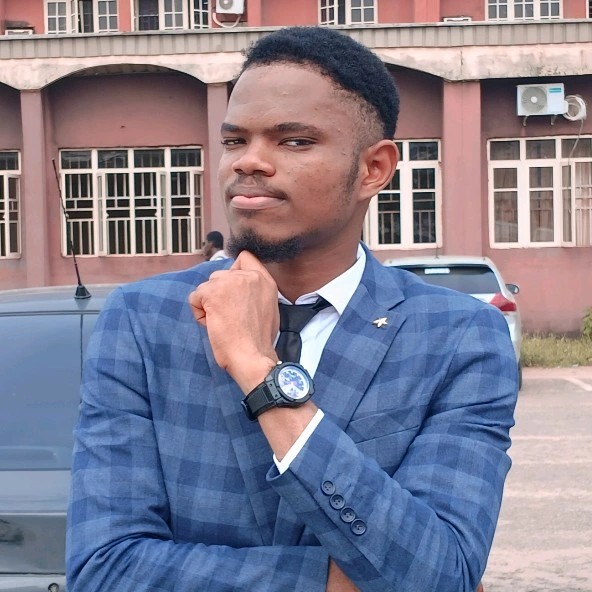
About Emmanuel Ikegwuonu
I am a mechanical engineering graduate of the University of Benin, Nigeria, with a strong interest in energy systems, particularly energy decentralization, energy efficiency, and energy storage. I currently work as a research engineer at the National Centre for Energy and Environment under the Energy Commission of Nigeria, where I have contributed to projects focused on the design and optimization of bioenergy systems. I am also an Engineering for Change fellow, where I'm working with the American Society of Mechanical Engineers (ASME) on the African Nuclear Standards and Technology Development impact project. I'm currently working on a goal to build Centauri Energy, a venture dedicated to developing advanced and efficient thermal management solutions for energy storage systems, with a focus on hot climates and developing regions where reliability and efficiency are critical constraints. I am driven by the belief that well-designed energy systems can unlock economic productivity and resilience at the community level. My technical skill set includes CAD, CAE, systems modeling, and additive manufacturing, with hands-on experience using tools such as SolidWorks, ANSYS, MATLAB, and Simulink. Outside of engineering, I enjoy reading, watching football, gaming, and taking long walks, which I find helpful for reflection and creative thinking.
Project
Emmanuel Ikegwuonu hasn't posted anything yet.
Emmanuel Ikegwuonu In 3 Questions
I am inspired by the challenge of solving deep, structural technological problems, especially those that quietly limit human progress. I am driven by the desire to pioneer technological breakthroughs that do more than optimize existing systems, but fundamentally transform how people live, work, and access essential services. For me, engineering is not an abstract exercise; it is a practical tool for reshaping reality, improving efficiency, and expanding what is possible for societies that are constrained by weak or fragile infrastructure. I am also deeply motivated by the process of building highly valuable companies around meaningful technology. I am inspired by organizations that translate rigorous thinking, technical depth, and long-term vision into products and systems that scale, endure, and shape entire industries. The discipline of turning ideas into sustainable enterprises (aligning technology, strategy, execution, and culture) drives my interest in innovation beyond the laboratory or design desk. Ultimately, I am inspired by long-term impact rather than short-term recognition. I am motivated by the ambition to build enduring technologies and institutions that continue to create value over decades, empower communities, and contribute to collective human advancement. The pursuit of quiet excellence (solutions that work consistently, efficiently, and at scale) guides my approach to innovation and defines what meaningful progress looks like to me.
In my opinion, there isn’t a single technology that is the key to sustainable development. The honest answer is that a small set of foundational technologies, working together, determines whether societies can grow without collapsing ecological or social systems. Though while this is the case, some matter far more than others. At the core is energy technology. Affordable, reliable, and clean energy underpins everything else; healthcare, water treatment, education, industry, digital infrastructure, and food systems. Without energy abundance, sustainability becomes austerity. Decentralized renewables, efficient grids, energy storage, and demand-side efficiency are essential because they reduce fragility, emissions, and inequality simultaneously. Closely following is materials and manufacturing technology. Sustainable development fails if we keep extracting, processing, and discarding materials inefficiently. Advances in lightweight materials, recycling, circular manufacturing, additive manufacturing, and low-carbon cement and steel matter because they directly reduce resource intensity while preserving economic output. Another major pillar is systems and data technology. Sustainability is a coordination problem as much as a technical one. Sensors, modeling tools, AI, and digital twins can allow societies to optimize energy use, water distribution, agriculture, transport, and supply chains. These technologies don’t replace physical infrastructure, but they dramatically increase how efficiently it is used. Finally, institution-enabling technologies are often underestimated. Technologies that support transparency, decentralization, access, and trust (such as digital identity, mobile finance, and distributed systems) enable sustainable policies to actually work in practice, especially in developing regions. If you strip it down to first principles: Sustainable development depends on energy abundance without environmental collapse, efficient use of materials, and the ability to coordinate complex systems at scale. Any technology that advances one of these pillars is good; those that advance all three are transformative.
My real-life superpower (I think) is my ability to see systems where others see isolated problems. I don’t just focus on building a product, finishing a project, or learning a skill in isolation; I instinctively zoom out to understand how technology, economics, society, and long-term impact interlock. Whether I’m thinking about energy decentralization, or hardware innovation in Africa, I naturally frame my work as part of a larger structure that must scale, endure, and create leverage. This lets me design with the end in mind, not just the next milestone. I also have a rare capacity to bridge deep engineering with strategic thinking. I’m comfortable moving between rigorous technical work (modelling, optimization, prototyping) and higher-level questions about markets, adoption, sustainability, and power dynamics. I don’t treat business or policy as afterthoughts to engineering; I integrate them into the design itself. This, I believe, allows me to translate complex technical ideas into real-world solutions that can survive outside the lab and actually matter in constrained, messy environments. Finally, what truly sets me apart is my execution bias rooted in constructive dissatisfaction. I’m unsettled by waste, shallow solutions, and borrowed models that don’t fit local realities, and that discomfort pushes me to build rather than complain. I’m ambitious in timescales, but practical in steps, constantly working backward from bold visions to concrete actions I can take now. When focused, this combination of systems vision, technical depth, and disciplined forward motion gives me the ability to architect things that are meant to last.