I am really not able to understand the fact that local people have to pay so much money for Water. which is a necessity and not a luxury for survival. Why cant there be a solution where there is one time installation cost for a system and people have access to clean water. Maintenance should be done by the community itself.
Your idea is actually in practice in some places now, especially communities in emerging economies. It has different names, but the gist is that the community owns and manages water and other utilities. They often have help building the infrastructure, as you suggested, and then they learn to organize a community payment or local taxation system to pay for operation, maintenance and repair. The model has strengths and weaknesses, as you can imagine. The model described in this report is a social business that ultimately does the same work and has the same results, more or less, as community ownership. The difference is ideological and also practical, depending on the context of each region. Both models have their fans and detractors. Someone smarter than me might be able to make a conclusive case for one or the other, or some third or fourth model (government-provided utilties, for example) but I haven’t seen that, yet. The author might chime in, too, but those are my thoughts. Thanks for the comment!
Shehab, you raise an interesting point about the necessity of paying for water while serving low-income communities. A useful analogy may be access to food, which is also a necessity for life, and one that requires payment to cover the cost of raising the food, processing it, transporting it, and selling it.
The challenge of water supply is really around the sustainability of the service delivery. Installing a water point is generally straight-forward. However, ensuring an ongoing water service is exceedingly difficult, especially when you include water treatment and distribution. The water sector suffers from a shockingly high failure rate: at any moment, over 30% of rural water systems are non-functional, and that figure is likely to be significantly higher when reliability and water-quality parameters are considered as well.
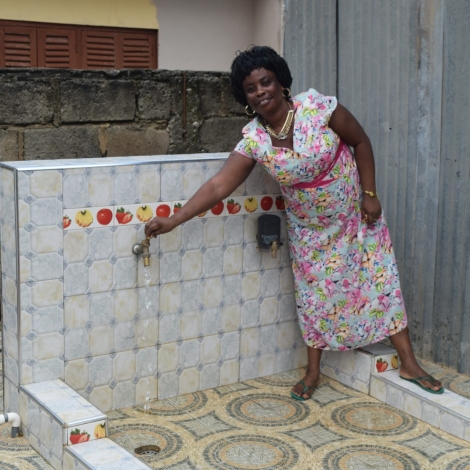
What Safe Water Network has found is that the crux of sustainability is ensuring that the entire value chain is understood and financed. Under Safe Water Network’s model, the initial costs for the water system are covered by grants or government funding, and the service costs are covered by the customers. This has proven effective, with 100% of Safe Water Network’s systems still operating in Ghana at less than 5% downtime. And interestingly, the water is: affordable to people living on $1/day; is on par with government tariffs; and is much less expensive than what informal vendors charge.
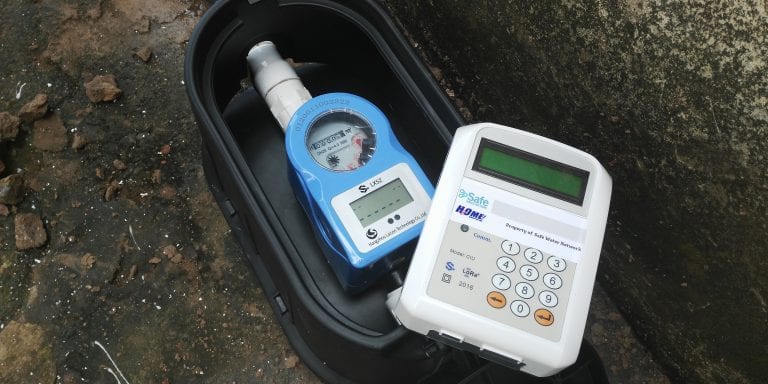
Having said that, Safe Water Network continually looks for ways to keep water affordable, despite high inflation rates. Whether it’s switching to solar power, utilizing digital finance, or implementing remote monitoring, there are ways to improve the financial performance of a water enterprise without requiring an increase in the price of water.
Editor’s note: This is the first in a two-part series about lessons learned during Safe Water Network’s experience household connections for water supplies in Ghana. The first article...
I am really not able to understand the fact that local people have to pay so much money for Water. which is a necessity and not a luxury for survival. Why cant there be a solution where there is one time installation cost for a system and people have access to clean water. Maintenance should be done by the community itself.
Your idea is actually in practice in some places now, especially communities in emerging economies. It has different names, but the gist is that the community owns and manages water and other utilities. They often have help building the infrastructure, as you suggested, and then they learn to organize a community payment or local taxation system to pay for operation, maintenance and repair. The model has strengths and weaknesses, as you can imagine. The model described in this report is a social business that ultimately does the same work and has the same results, more or less, as community ownership. The difference is ideological and also practical, depending on the context of each region. Both models have their fans and detractors. Someone smarter than me might be able to make a conclusive case for one or the other, or some third or fourth model (government-provided utilties, for example) but I haven’t seen that, yet. The author might chime in, too, but those are my thoughts. Thanks for the comment!
– Rob Goodier, News Editor at E4C
Shehab, you raise an interesting point about the necessity of paying for water while serving low-income communities. A useful analogy may be access to food, which is also a necessity for life, and one that requires payment to cover the cost of raising the food, processing it, transporting it, and selling it.
The challenge of water supply is really around the sustainability of the service delivery. Installing a water point is generally straight-forward. However, ensuring an ongoing water service is exceedingly difficult, especially when you include water treatment and distribution. The water sector suffers from a shockingly high failure rate: at any moment, over 30% of rural water systems are non-functional, and that figure is likely to be significantly higher when reliability and water-quality parameters are considered as well.
What Safe Water Network has found is that the crux of sustainability is ensuring that the entire value chain is understood and financed. Under Safe Water Network’s model, the initial costs for the water system are covered by grants or government funding, and the service costs are covered by the customers. This has proven effective, with 100% of Safe Water Network’s systems still operating in Ghana at less than 5% downtime. And interestingly, the water is: affordable to people living on $1/day; is on par with government tariffs; and is much less expensive than what informal vendors charge.
Having said that, Safe Water Network continually looks for ways to keep water affordable, despite high inflation rates. Whether it’s switching to solar power, utilizing digital finance, or implementing remote monitoring, there are ways to improve the financial performance of a water enterprise without requiring an increase in the price of water.