Suggested Articles
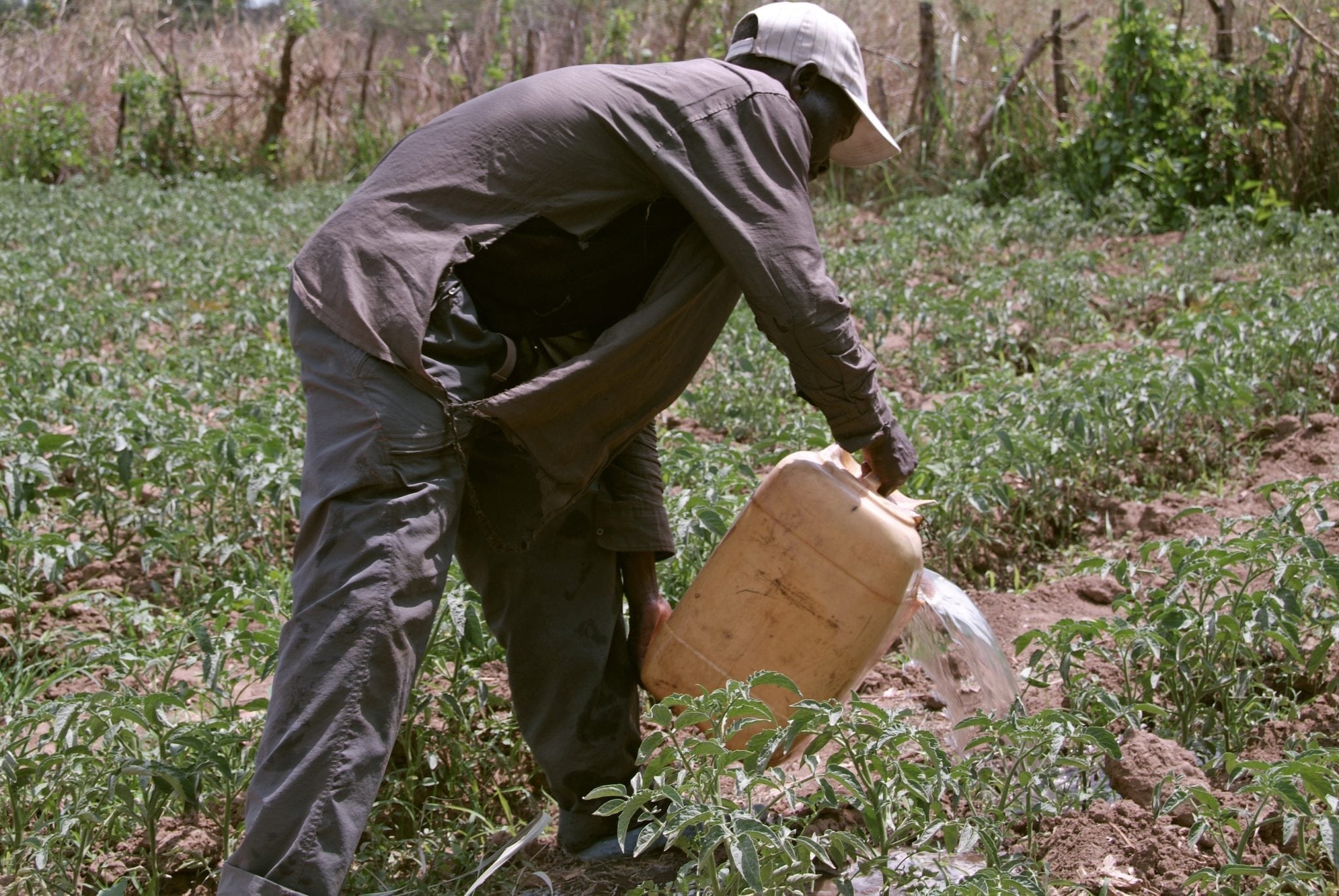
Ten low-tech ways to irrigate crops
Irrigating a farm can double the amount of food it produces. But even with that potential, 80 percent of farmland worldwide is not irrigated, says the UN Food and Agriculture...
We've rounded up ten low-cost technologies to treat water, and not one requires boiling.
Irrigating a farm can double the amount of food it produces. But even with that potential, 80 percent of farmland worldwide is not irrigated, says the UN Food and Agriculture...
THANK YOU FOR THIS CONVINIENT INCLUSION OF THESE IDEAS TO TREAT WASTE WATER. PLEASE ADD LINKS TO ALL THESE METHODS’ DESCRIPTION. A VIDEO WILL HELP SERVE EVEN BETTER.
You did not tell how to treat chlorine water. Why???
Chlorine is considered a method of treating water! Our goal was to treat water by removing life-threatening pathogens. But chlorine can be a problem, too. The bad taste it leaves can deter people from using it. If you know of effective, low-cost ways to remove it please share.
I want water filter plant pls give me details
i sometime think in Indonesia whereas agro is essential but recently no many engineer involve in water treatment for low cost farm. to increase yield in farming one essential is to get better water because many river now are containing some effluent from factories around them and finally teh water consume also for human, farm etc.
i need to discuss with some engineer overseas, how to get technologies go deeply in water treatment for farm especially for low cost farmer.
my background education in chemical engineering and now working fro agrochemical business.
I’M THINKING OF BUILDING MY OWN BONE CHAR FILTER TO FILL A STOCK TANK FOR ICE BATHS. tHAT WILL REMOVE QUITE A BIT OF THE CHEMICALS i’D LIKE TO FILTER. i’VE FOUND SOME FILTERS THAT ALLOW YOU TO PUT BONE CHAR AND ALUMINA SILICATE FOR ADDED FILTRATION AND THE BEST PART THEY ARE REFILLABLE WITH BULK MEDIA.
bUT i HAVE AN ISSUE i WONDER IF SOMEONE CAN CHIME IN ON. THAT WATER IN THE 100 GALLON STOCK TANK. i CAN’T IMAGINE IT CAN SIT LONG BEFORE GROWING SOMETHING. wITH THE CHLORINE FILTERED OUT. Is it possible to add chlorine directly to the water and then remove the chlorine when I am going to use it.
PARDON the caps. It wouldn’t let me type in lowercase.
I need to know the jobs to done on backwash and rinse methods
such a informative and b
etter techniques u provided
105/286 C,Sri nagar Opp Kesco & Police Station Chan Gunj Kanpur
Thank you for mentioning that just by using a bucket, clay, and sawdust, you can actually filter out dirt and other microbes. My husband and I have been wondering whether we should get our water treated and if so how. Though your ceramic filter can catch disease-causing microbes easily, we will probably be asking professional to treat our water so we don’t have any sort of harmful things in there.
well, a lot has been done but more also should be done especially in developing countries where most people are poor and ignorant. am developing a solar water treatment system which could be affordadable to most ugandans who are facing a problem of waterborne diseases
thank you so much.very useful information.
Really appreciated the low cost water filtration overview. I think this can become a passion of mine with certain addition I can see a business which has global applications.
Serve people’s is service of God
Why not a simple hyrdocyclone? Cyclones for removing dust from air are amazingly efficient, and I pelieve there is a way to simply swirl water to remove sand, grit, slurry, etc. There has to be a way to do this.
Very nice information. Thanks
what is the most recommended filter?
Want to read more articles and if agree want to send an article about foot opeta
Engineering for change!
Every time &good to see you
Very useful intermediate technology for developing con
Good to all ideas low cost filter system are the solution to face the climate change.
E17 – SIMPLE WATER TREATMENT METHODS FOR USE IN THE HOME
1) What is involved ?
The methods presented in this factsheet are used to make water drinkable. They can be applied at hole, at the family level.
The methods described comprise :
* Straining
* The three pot method
* Treatment by boiling
* Treatment by chlorination
* Treatment by ceramic filtersLifestraw method
* Treatment by slow sand filtration
* The Naiade method (UV radiation)
* SODIS method (Sun radiation)
* Solvatten method (Sun radiation)
* Lifestraw method
2) Why ?
Treating drinking water prior to consumption combats many illnesses such as dysentery, typhoid fever and cholera.
Illustration Red Cross
3) Straining water through cloth
It is easy to filter water using cloth. This kind of filtration will eliminate the main solid impurities from water as well as any insect larvae that it may contain. The cloth used, cotton preferably, must be thick enough to properly retain the impurities. If it is too thick, then filtration will take longer. It must always be washed prior to use.
Straining alone is not a sufficient form of treatment. Nevertheless, straining water before treating it using one of the other methods described in this factsheet will significantly improve the quality of the water obtained.
a) Advantages
– Simple to use
– Almost no cost
– Very useful, or even essential for pre-treatment purposes
b) Drawbacks
– A summary treatment that cannot make water drinkable if already contaminated
– Cost may be high depending on the energy source used
4) The three pot method
This method serves the same purpose as filtration by removing the main solid impurities found in water.
For improved efficiency, this method may be used to complement filtration.
Source : Household water treatment and safe storage in emergencies, International Red Cross Agrandir
a) Advantages
– Easy to use. Almost no cost.
– Significantly reduces impurities and pathogens
b) Drawbacks
– Disinfection is not complete
– Wait time
5) Treatment by boiling
Boiling too is relatively easy to do. It will kill all of the germs and micro-organisms present in the water. To do so, first filter or decant the water, then bring it to a rolling, bubbling boil (simply steaming water is not boiled) for one minute at low altitude and for at least three minutes at altitudes above 2,000 metres. Boiled water may lack taste. This problem can be solved by vigorously shaking the water purified to re-oxygenise it or by adding a little salt.
a) Advantages
– Easy to use
– Kills all pathogens
b) Drawbacks
– Required wood (approx. 1 kg per litre of water) and a heat resistant recipient
– Actual cost is relatively high
6) Treatment by chloration
(For more information, refer to Factsheet E 18 “Treatment by Chlorination”.)
Chlorination is a simple and effective way to disinfect water to make it drinkable. It comprises introducing chlorinated products (chlorine tabs, bleach, etc.) into the water to kill the micro-organisms contained in it. After the products have acted for 30 minutes, the water will be drinkable. It remains so for a few days (depending on storage conditions) thanks to the non volatility of the chlorine.
a) Advantages
– Muddy water can be made drinkable. If the treatment is done properly, all of the pathogens are eliminated.
– Chlorination has a durable effect.
b) Drawbacks
– Products must, for the most part, be brought in from elsewhere. Handling risks involved.
– Non negligible cost.
Chlorination may, for example, take place after flocculation, where necessary in an earthenware pot fitted with a tap on the bottom (The drinking water station dreamt up by Dr Monjour, see end) or in any other recipient.
Good article, have you ever looked at the ‘Watercone’ and if yes, what is the opinion about this technology? Why is it not broadly in use because it looks very promising invention.
That looks interesting, thanks for mentioning it. I’ve forwarded your comments on to the Solutions Library manager for possible inclusion.
I rather say that you have done remarkable research but some aspect of the diagram of water treatment needs some tweaking for getting more efficiency