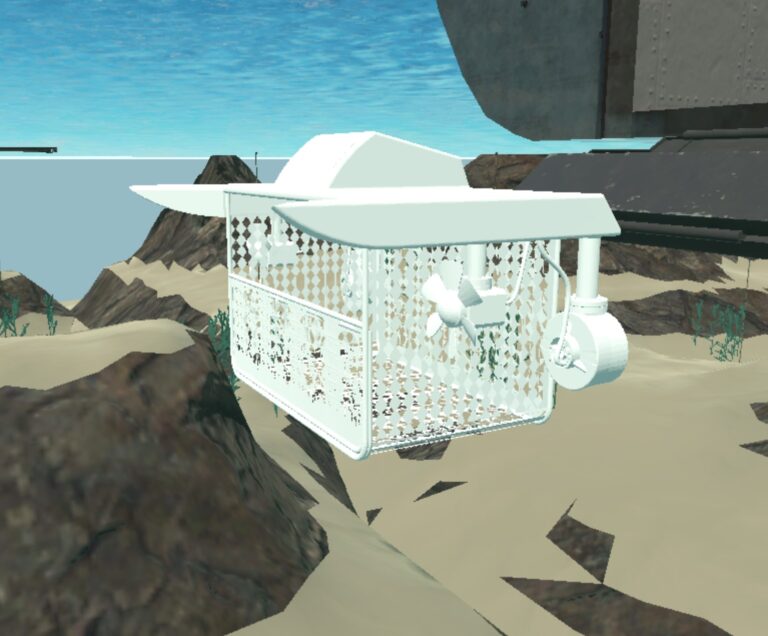
The United Nations Development Programme has opened a global innovation challenge aimed at engineers, scientists and technologists to improve underwater mine detection in crisis-affected communities. Detecting and mapping submerged mines and unexploded ordnance in rivers, lakes and coastal zones may be one of the most difficult endeavors in the recovery from armed conflict.
UNDP is partnering with UK innovation platform Wazoku and consultancy SeaFreight Labs to crowdsource practical, low-cost technologies that can identify concentrations of underwater explosives in both fresh and saltwater environments. The goal is to find field-ready approaches that make clearance operations safer and give communities confidence to return to critical waterways.
“I think E4C is a great audience for this challenge” – Harry Sangree, SeaFreight Labs
“The problem of underwater ordnance is as new as the conflict in Ukraine and as old as unexploded ordnance from World War II in the Solomon Islands,” Harry Sangree, Founder and CEO of SeaFreight Labs, says.
“I think E4C is a great audience for this challenge,” Mr. Sangree says. “UNDP is looking for something that can go in a small boat or be towed behind the boat that can detect underwater unexploded ordnance and then map its surface location on a public geographic tool. The solution cannot cost more than (USD) $5,000.”
Submerged ordnance from past and present conflicts continues to block reconstruction efforts, threaten lives, and damage ecosystems. Traditional underwater survey methods are slow, expensive and technically challenging, especially in murky, debris-filled or dynamic coastal settings. UNDP hopes that tapping into a global pool of engineers and problem-solvers will surface novel sensing modalities, autonomous or remotely operated survey systems, mapping techniques or deployment methods that accelerate early detection.
“Rivers and coastlines are lifelines for communities recovering from conflict, but they’re often littered with dangers beneath the surface,” said Steinar Essen, UNDP’s Global Advisor on Mine Action. “By tapping into global innovation, we can find faster, safer and more affordable ways to make these waters safe again.”
The challenge is hosted on Wazoku’s InnoCentive platform, whose 700,000-member solver community has delivered technical breakthroughs for organizations including the International Rescue Committee and the U.S. Environmental Protection Agency. SeaFreight Labs joins as Project Advisor, continuing its work supporting open-innovation programmes for humanitarian and development partners.
Submissions for the underwater explosives challenge are open until March 9, 2026. Upcoming rounds will focus on youth-led mental health solutions in crisis settings and community-driven tools for real-time crisis data collection.
More details and participation guidelines are available on the challenge page at the button below.
To learn more about UNDP’s innovation initiatives, visit their page at innocentive.com.