About This Webinar
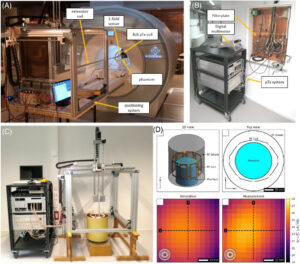
Images: NMR in Biomedicine
Promising medical innovations can fail to move beyond the prototype anywhere in the world, but the problem is amplified in settings with scarce resources. It’s not always clear what makes innovation useful, adoptable and scalable in communities that are underserved.
Join us for the next Engineering for Change webinar presented by Christopher Adlung, Researcher in Telemedicine & Frugal Innovation at Delft University of Technology. Christopher will consider the question, ‘Are we building what people and health systems actually need?’ He will discuss how engineers, researchers and companies can take a systems perspective, design for adoption from the beginning, and focus on solving real problems rather than simply developing new products.
The presentation will explore the difference between adoption, implementation and scale-up, and why a technology that works technically may still fail to deliver its intended impact. Christopher will discuss lessons from successful and unsuccessful innovations, including frugal approaches to advanced medical technology, telemedicine kiosks and other ways of bringing care closer to underserved communities.
The webinar will also examine the barriers that can prevent medical technologies from taking hold, including infrastructure, cost, technical capacity, regulation, workflow, cultural context and user needs. Frugal innovation offers one approach by emphasizing affordability, simplicity, accessibility and adaptability to local conditions.
Come, ask questions, share your experiences and meet like-minded people from around the world.
For deeper context, please see these three papers in open source publications that Christopher has co-written:
| Adlung C, Paridar P, Figueroa C, Niehot C, Mandyam NK, van Beers C, Hinrichs-Krapels S Adoption of Telemedicine in Low-Resource Settings Through the Lens of Frugal Innovation: Protocol for a Systematic Review JMIR Res Protoc 2026;15:e83311 doi: 10.2196/83311 |
Adlung C, Niehot C, van Capelle C Quality of care metrics contributing to the development, implementation, and evaluation processes of telehealth solutions in home-care settings for paediatric palliative care: protocol for a systematic literature review BMJ Open 2026;16:e112005. doi: 10.1136/bmjopen-2025-112005 |
Adlung, C., van der Kooij, N., Diehl, J.C. et al. Existing and emerging frameworks for the adoption and diffusion of medical devices and equipment in low-resource settings: a scoping review Health Technol. 15, 273–297 (2025). doi: 10.1007/s12553-024-00938-4 |
Presenter

Christopher Adlung is a Researcher Telemedicine & Frugal Innovation at Delft University of Technology in the Faculty of Technology, Policy and Management. He is also the Founder & CEO of TAIRIS Medical B.V., based in The Hague, Netherlands.
Moderator

Winnie Wangari Kibiru is the MedTech Lead at Villgro Africa, where she heads the organization’s MedTech strategy, innovation portfolio, ecosystem partnerships, and technical advisory services, supporting entrepreneurs from concept development through commercialization and investment readiness.
She has a career in health innovation and the MedTech ecosystem guiding their development across Africa. She is a mechanical engineer by training and an ISO 13485-certified quality systems professional with experience in medical device development, regulatory strategy, clinical readiness, quality management systems, technology transfer, manufacturing readiness, and commercialization. She also leads the Transforming Africa MedTech Conference (TAMC), one of Africa’s leading platforms for advancing medical technology innovation, bringing together policymakers, innovators, investors, manufacturers, clinicians, and ecosystem partners to strengthen Africa’s health innovation landscape.
Beyond MedTech, Winnie has supported a broad portfolio of healthcare startups through accelerator and innovation programs such as Africa Impact Challenge, HTHA, AI4H, Johnson & Johnson, i3, Product Development Partners (PDP), GIZ FAIR Forward, and regional health innovation
initiatives. She has worked with governments, universities, development partners, investors, manufacturers, regulators, and innovation hubs across Africa to strengthen healthcare innovation ecosystems and accelerate the translation of research into scalable health solutions.
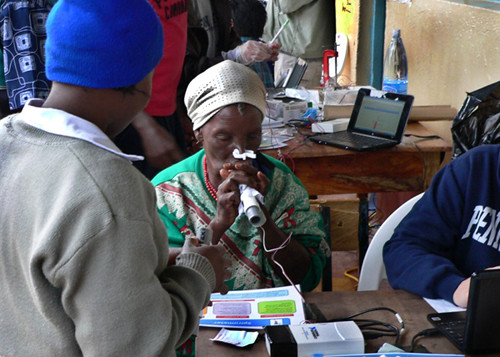
Photo: A woman blows into the spirometer at a Mashavu camp at the Children and Youth Empowerment Center in Nyeri, Kenya, courtesy of Khanjan Mehta

There is no link to register.
Fixed that, thank you!