Further, the community should have a veto to allow or disallow the dissemination of the results beyond their researched community, see step 7 in “Method of Research in a We-Paradigm, lessons on Living Research in Africa.” In: Nielsen, P. and Kimaro, H.C. (eds.) Information and Communication Technologies for Development. Strengthening Southern-Driven Cooperation as a Catalyst for ICT4D. ICT4D 2019. IFIP Advances in Information and Communication Technology, vol 552. pp. 72–82. Springer, Cham (2019).
Giving the community power to veto the dissemination of study results at first sounds like the responsible thing to do, but giving it a second thought, I’m wondering if that would have an unintended consequence. Researchers and institutions might not be willing to pay for studies that can be canned after they are concluded, which might deter research that could potentially help the communities in which it takes place. Science illiteracy is such a problem, even (especially) in developed regions, that it’s not hard to imagine communities that reflexively veto dissemination of results. Have you come across a problem like that or do you know of a solution or a rebuttal?
About this webinar: The wide-spread availability of phone-based communications, and the increasing availability of smartphones and tablets offers international development researchers, practitioners, and students an array of new...
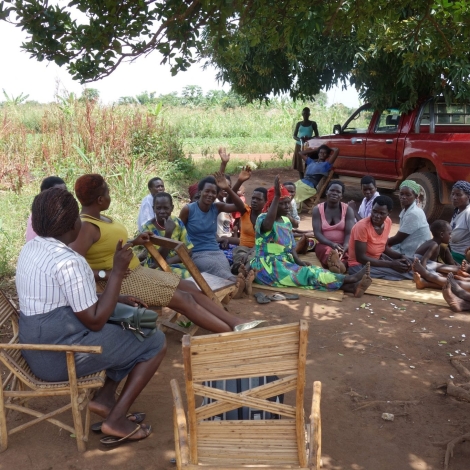

Further, the community should have a veto to allow or disallow the dissemination of the results beyond their researched community, see step 7 in “Method of Research in a We-Paradigm, lessons on Living Research in Africa.” In: Nielsen, P. and Kimaro, H.C. (eds.) Information and Communication Technologies for Development. Strengthening Southern-Driven Cooperation as a Catalyst for ICT4D. ICT4D 2019. IFIP Advances in Information and Communication Technology, vol 552. pp. 72–82. Springer, Cham (2019).
Giving the community power to veto the dissemination of study results at first sounds like the responsible thing to do, but giving it a second thought, I’m wondering if that would have an unintended consequence. Researchers and institutions might not be willing to pay for studies that can be canned after they are concluded, which might deter research that could potentially help the communities in which it takes place. Science illiteracy is such a problem, even (especially) in developed regions, that it’s not hard to imagine communities that reflexively veto dissemination of results. Have you come across a problem like that or do you know of a solution or a rebuttal?