Agriculture
December 27, 2023
AquaFilter Family
Read SolutionImplemented by
Aquabox, UK
Updated on November 10, 2025
·Created on January 18, 2024
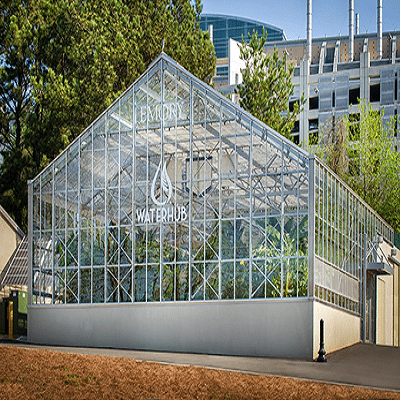
The WaterHub® is an onsite water reclamation technology which treats wastewater to be used for non-potable applications.
The WaterHub® is an onsite water reclamation and reuse system with a design capacity ranging from from ~ 25,000 – 2 million gallons per day (~ 94,635 – 7.57 million litres per day). It uses ecologically engineered technology to treat the wastewater which is fit to use for non-potable applications (e.g., toilet flushes, gardening, etc.). This wastewater recycling system can be customised based on the client’s requirement using a performance financing model (known as Water Processing Agreement) and can be deployed in industrial, urban or rural setting.
Target SDGs
SDG 6: Clean Water and Sanitation
SDG 3: Good Health and Well-Being
Target Users (Target Impact Group)
Public Sector Agencies
Distributors / Implementing Organizations
Sustainable Water's strategic partners include Reeves Young, McKim & Creed, and Entex Technologies.
Competitive Landscape
Regions
North America
Countries
United States
Manufacturing/Building Method
The WaterHub® construction steps includes design, construction, and commissioning processes. The product is constructed on-site based on the client's requirements.
Intellectural Property Type
Trademark
User Provision Model
Water Processing Agreement
Distributions to Date Status
To date, WaterHub® systems have been deployed in at least seven confirmed installations — Piedmont Hospita, Emory University, Philip Morris USA, RMEP Cummins, Reynolds operations center, JEP Cummins, Austin Planning and Development Center—with a major upcoming installation planned at University of Texas at Austin (commercial operation starting 2027). They have been adopted across academic, healthcare, commercial, and industrial sectors under H?O Innovation’s model.
Flow rate (L/min)
Unknown
Power Supply Type
Electrical
Technology type
biological treatment, disinfection. Combined submerged fixed-film hydroponic reactors with a moving bed bio-reactor.
BOD Removal Efficiency
1.88
COD removal efficiency
Unknown
NH4-N Removal Efficiency
Unknown
TSS removal efficiency
1.43
Total Phosphorus Removal Efficiency
Unknown
Fecal Coliform Removal Efficiency
Unknown
Design Specifications
The WaterHub mines the wastewater from the sewers using an integrateable system, which is sent to the primary screening systems (rotating belt filters and micro strainers) and primary equalization systems. This is followed by the biological treatment solutions which include either moving-bed bioreactors, submerged fixed film reactors, membrane bioreactors or a combined system), which can be combined with an ecological treatment solutions (hydroponic reactors or reciprocating wetlands - ReCip®). The last stage involve polishing and disinfection systems, such as reverse osmosis and capacitative deionisation and ultraviolet disinfection systems, respectively.
Technical Support
Under a Water Purchase Agreement (WPA), H2O Innovation is responsible for operating the WaterHub®, handling all tasks required to produce a clean, safe, and dependable supply of reclaimed water. Even outside a WPA, H2O Innovation can still manage and maintain the system, or the client may choose to contract a licensed third-party operator. When operating under a WPA, H2O Innovation also assumes all costs related to operations and maintenance, including both preventive and predictive upkeep.
Replacement Components
Pumps, primary screen, filters, bioreactors.
Lifecycle
The WaterHub facility at Emory University (the first of its kind) is designed for an operational life of 30 years.
Manufacturer Specified Performance Parameters
The targets vary based on the projects. Piedmont Hospital required BOD < 2.0 mg/L and TSS < 2.0 mg/L, while JEP Cummins required BOD < 5.0 mg/L and TSS < 5.0 mg/L.
Vetted Performance Status
Unknown
Safety
Chlorine used for wastewater treatment could be a potential hazard. Additionally, users must take appropriate precautions when using electrical devices.
Complementary Technical Systems
A reliable power supply is required for the functioning of the product. The treatment process can take from 12 to 24 hours.
Academic Research and References
“Zhao, S., 2023, Comparative Study of Conventional and Biological Water Treatment, Academic Journal of Environment & Earth Science, 5(9); doi: 10.25236/AJEE.2023.050910.
(This study includes other schematics of WaterHub wastewater treatment processes)
Allison, D., Lohan, E. and Baldwin, T. (2018), The WaterHub at Emory University: Campus Resiliency through Decentralized Reuse. Water Environment Research, 90: 187-192. https://doi.org/10.2175/106143017X15054988926569
(This study mentions the operational life of 30 years and product schematics)”
Compliance with regulations
The WaterHub is designed to comply with all relevant state and local permitting regulations.
Other Information
Contact person: bob.salvatelli@h2oinnovation.com
Agriculture
December 27, 2023
Implemented by
Aquabox, UK
Agriculture
January 11, 2024
Implemented by
Kenya Ceramic Project (KCP)
Agriculture
January 8, 2024
Implemented by
DayOne Response
Agriculture
January 10, 2024
Implemented by
NativeEnergy
Agriculture
January 2, 2024
Implemented by
Klorfasil
Agriculture
December 29, 2023
Implemented by
RealRelief
Agriculture
January 4, 2024
Implemented by
Basic Water Needs
Agriculture
January 2, 2024
Implemented by
wateroam
Agriculture
January 2, 2024
Implemented by
Uzima
Agriculture
January 24, 2024
Implemented by
Splash
Have thoughts on how we can improve?
Give Us Feedback